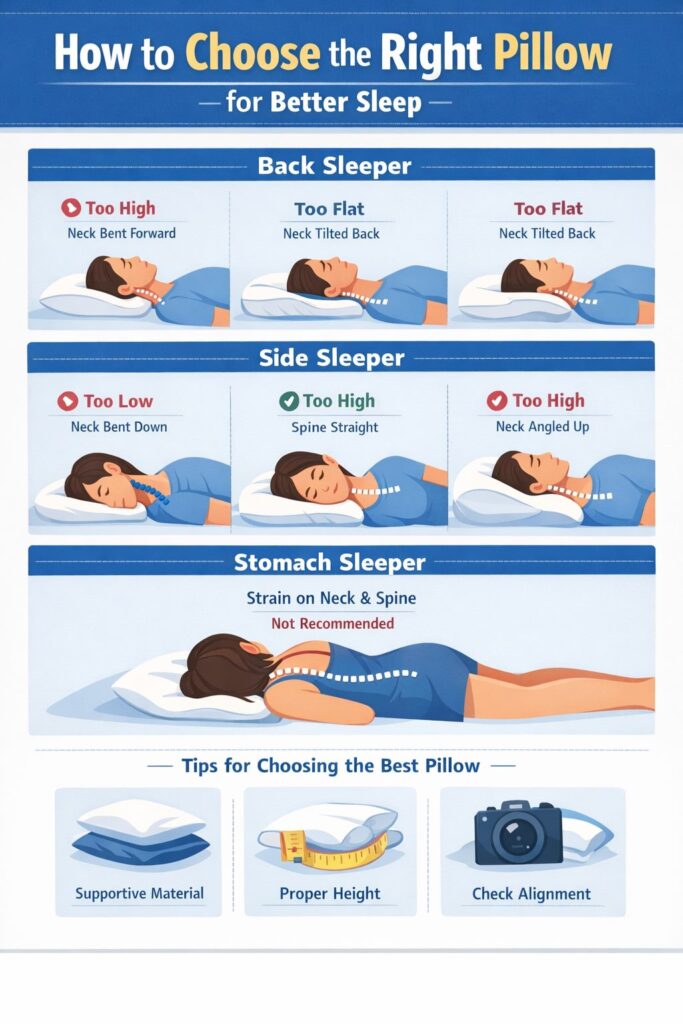
How to Choose the Right Pillow for Better Sleep
Many people overlook the importance of a pillow, thinking it’s just a basic sleeping accessory. In reality, the right pillow can significantly improve your sleep quality, while the wrong one can cause neck pain, poor posture, and even breathing issues.
In this guide, you’ll learn how to choose the perfect pillow based on your sleeping position to help you sleep better and wake up refreshed.
Why Choosing the Right Pillow Matters
A proper pillow supports your head, neck, and spine in a neutral position. This helps keep your airway open, reduces discomfort, and prevents interrupted sleep.
If your pillow is too high or too low, it can restrict airflow and lead to snoring or poor sleep quality.
1. Back Sleepers
If you sleep on your back, you should choose a low to medium-height pillow to keep your head aligned with your spine.
- Pillow too high → pushes your head forward and restricts breathing
- Pillow too low → tilts your head backward, causing discomfort
Tip: Choose a pillow that keeps your neck and spine in a straight, neutral position.
2. Side Sleepers
Side sleepers need a thicker pillow because there is more space between the head and the mattress.
- Pillow too thin → neck bends downward
- Pillow too thick → neck bends upward
Tip: Choose a pillow that fills the gap between your shoulder and head to maintain proper spinal alignment.
3. Stomach Sleepers
Sleeping on your stomach is generally not recommended, as it can strain your neck and spine.
In some cases, stomach sleeping may indicate breathing issues such as sleep apnea, as this position may help keep the airway open.
Tip: If you must sleep this way, use a very thin pillow or try to transition to a healthier sleeping position.
Pillow Materials Matter
The material of your pillow plays a key role in comfort and long-term support.
- Down pillows → soft but tend to collapse
- Standard foam → may lose shape over time
- High-quality foam → offers better support and durability
Tip: Choose a pillow that maintains its shape and provides consistent support throughout the night.
How to Check if Your Pillow Is Right for You
- Lie down and have someone take a photo from the side
- Your head, neck, and spine should form a straight line
- You should not feel neck pain or wake up frequently
Conclusion
Choosing the right pillow based on your sleeping position is essential for better sleep, improved health, and overall well-being.
Once you find the right pillow, you’ll immediately notice the difference in how well you sleep and how refreshed you feel in the morning.
Final Tip
Don’t underestimate the power of a good pillow — it can make or break your sleep quality.